



How each fabric is made
Linen comes from the stalk of the flax plant; cotton comes from the soft fibre around the cotton seed. Where the fibre grows explains most of how the two sheets feel.
Flax is sown in spring and is ready in about 100 days. It is pulled rather than cut, then left lying in the field while dew, rain and soil microorganisms break down the pectin that glues the fibres to the stalk. This is called retting. The dried stalks are then scutched (beaten mechanically to free the fibre) and combed into long, glossy ribbons before spinning. The finest yarns are wet-spun, with the fibres drawn through water heated to about 60°C; dry spinning makes thicker, more rustic yarn.
Beddie’s Ivy linen carries European Flax certification. That means the flax was grown in Western Europe from GMO-free seed, retted in the field rather than in water, scutched without water or solvents, and traced from fibre to finished product, with the chain checked by an independent organisation. European flax is generally grown without irrigation.
Cotton fibres are cleaned from the seed, combed and spun. The length of each fibre, called its staple, matters most. Australia’s base grade is about 28.6mm (1⅛ inches), and longer fibres spin finer, stronger yarn. Beddie’s cotton sheets use long-staple cotton for exactly that reason.
Sateen vs plain weave
The weave changes the feel as much as the fibre. Beddie’s cotton is a sateen weave; linen bedding is usually a simpler plain weave.
In a sateen weave, each thread floats over several others before going under one. Beddie uses four over, one under. More of the smooth yarn sits on the surface, which gives sateen its soft drape and gentle lustre. The longer floats can catch on rough edges, so wash sateen away from hook-and-loop fasteners and open zips.
A plain weave goes simply over one, under one. It is the structure used for percale and for most linen. It is matte and hard-wearing. Linen yarn is naturally a little uneven, with small thicker sections called slubs, and that is where linen’s textured, lived-in look comes from.
- Sateen (cotton)
- Smooth, soft lustre, drapes closely, feels slightly warmer. Beddie’s cotton range.
- Percale (cotton)
- Crisp, matte and cool, like a hotel sheet. Beddie doesn’t make percale.
- Linen
- Textured, airy and relaxed, with a natural crinkle. Beddie’s Ivy linen.
Which is better for hot sleepers?
Linen. It isn’t magically cold to the touch; it is better at dealing with sweat.
Flax fibre lets water vapour pass through easily. Textile references describe linen absorbing up to about 20% of its weight in moisture, and its fibre structure doesn’t trap air the way insulating fibres do. University of Sydney sleep researchers note that cotton absorbs sweat but doesn’t wick it away efficiently, which is why cotton can feel clammy on a humid night.
The sleep research is thin. A 2024 systematic review found a single study comparing linen and cotton sheets: eight young men napping at 29°C and 70% humidity, where linen was linked to less wakefulness and light sleep. That is too small to prove much, and the bedding pads differed too, but it points the same way as the fibre science.
Cotton sateen is still breathable. If you run a little warm but love smooth sheets, sleep under the flat sheet alone in summer and add a quilt as the nights cool down. Beddie sells every piece separately for that reason.
Thread count and GSM: what the numbers mean
Neither number tells you much on its own. For cotton, fibre length and weave matter more than thread count; for linen, GSM tells you weight, not quality.
Thread count is the number of threads in a square inch of fabric. Choice warns that brands inflate it by counting each strand of multi-ply yarn, so you get extra ply rather than extra threads, and multi-ply yarns tend to be less durable. Its guidance is that around 200 to 400 is good quality and comfortable. Beddie’s cotton sateen is 450 thread count, but the long-staple fibre and the weave do more for how it feels than that number does.
GSM is grams per square metre, a measure of how heavy the fabric is. Lighter linen feels airier and heavier linen feels denser and cosier. Beddie’s Ivy sheets and quilt covers are 170gsm, a mid-weight chosen to drape well and still suit an Australian summer.
How they change over time
Both soften with washing, but linen changes more.
Each wash breaks down a little more of the natural pectin left in flax fibre, so linen keeps getting softer and more fluid. Beddie’s linen is stone-washed before it reaches you, which removes the stiff break-in period; most people notice a real change after five or six washes. Linen creases easily, and that relaxed crinkle is part of the look rather than a flaw.
Cotton’s main enemy is pilling: little balls that form when loose fibre ends work their way to the surface and tangle. Yarn spun from longer fibres has fewer loose ends, so long-staple cotton resists pilling better than the short-staple cotton common in budget sheets. Washing on a gentle cycle and skipping harsh detergents helps both fabrics last.
Washing and drying
Both are easy to wash at home. Linen is the fussier about heat and spin.
- Linen
- Wash cool to warm (no more than 40°C) on a gentle cycle with a mild detergent and no bleach. Avoid a hard spin, which sets deep creases. Line dry out of direct sun, or tumble on low and take it out while slightly damp. Wash with similar colours, as linen can release a little dye at first.
- Cotton
- Wash on a cool, gentle cycle with a mild detergent, no bleach. Tumble dry on low or line dry in the shade.
- Fabric softener
- Skip it for both. Choice found softeners reduce how much water fabric absorbs, which works against linen’s main benefit.
- Shrinkage
- Beddie’s linen is pre-washed, so only minimal shrinkage is expected. High heat is the main cause of shrinkage in either fabric.
What a whole Queen bed costs
Linen costs more piece for piece, so the gap grows across a full bed.
| Piece | Ivy French Linen | Pure Cotton Sateen |
|---|---|---|
| Fitted sheet | A$159.95 | A$89.95 |
| Flat sheet | A$159.95 | A$89.95 |
| Standard pillowcase pair | A$75.95 | A$59.95 |
| Quilt cover | A$250 | A$215.95 |
| Total | A$645.85 | A$455.80 |
The bundle builder takes 15% off four or more pieces, so this linen bed came to A$548.97 when we checked. Quilt cover prices vary a little between cotton designs.
Environmental footprint
Both fibres have trade-offs; neither is automatically “green”.
European flax is generally rain-fed and, under the European Flax standard, retted in the field and processed without water retting or solvents. A 2024 peer-reviewed comparison found flax has a substantially lower water footprint than cotton.
Cotton usually needs more water. Cotton Australia reports Australian growers apply 6 to 7 megalitres of irrigation water per hectare on average, with about a third of the crop grown on rainfall alone, and that growers’ water-use productivity has improved 52% since 1997.
OEKO-TEX Standard 100, which both Beddie fabrics carry, is a different thing. It tests textiles against more than 1,000 harmful substances and covers what touches your skin, not how the fibre was farmed.
Common questions
- Are linen or cotton sheets better for hot sleepers?
- Linen. Both breathe, but linen moves moisture away faster, which matters most on hot, humid nights. Cotton sateen suits people who run a little warm but prefer a smooth sheet.
- Which feels softer, linen or cotton?
- Cotton sateen is smoother from the first night. Beddie’s linen is pre-washed and soft from the start, but it has a visible texture and keeps softening through the first five or six washes.
- Do linen sheets need ironing?
- No. The crinkle is how linen is meant to look. Take it out of the dryer while slightly damp, or line dry it, and smooth it by hand. If you want a crisp, flat bed, cotton sateen is the better fit.
- Do Beddie’s floral prints come in linen?
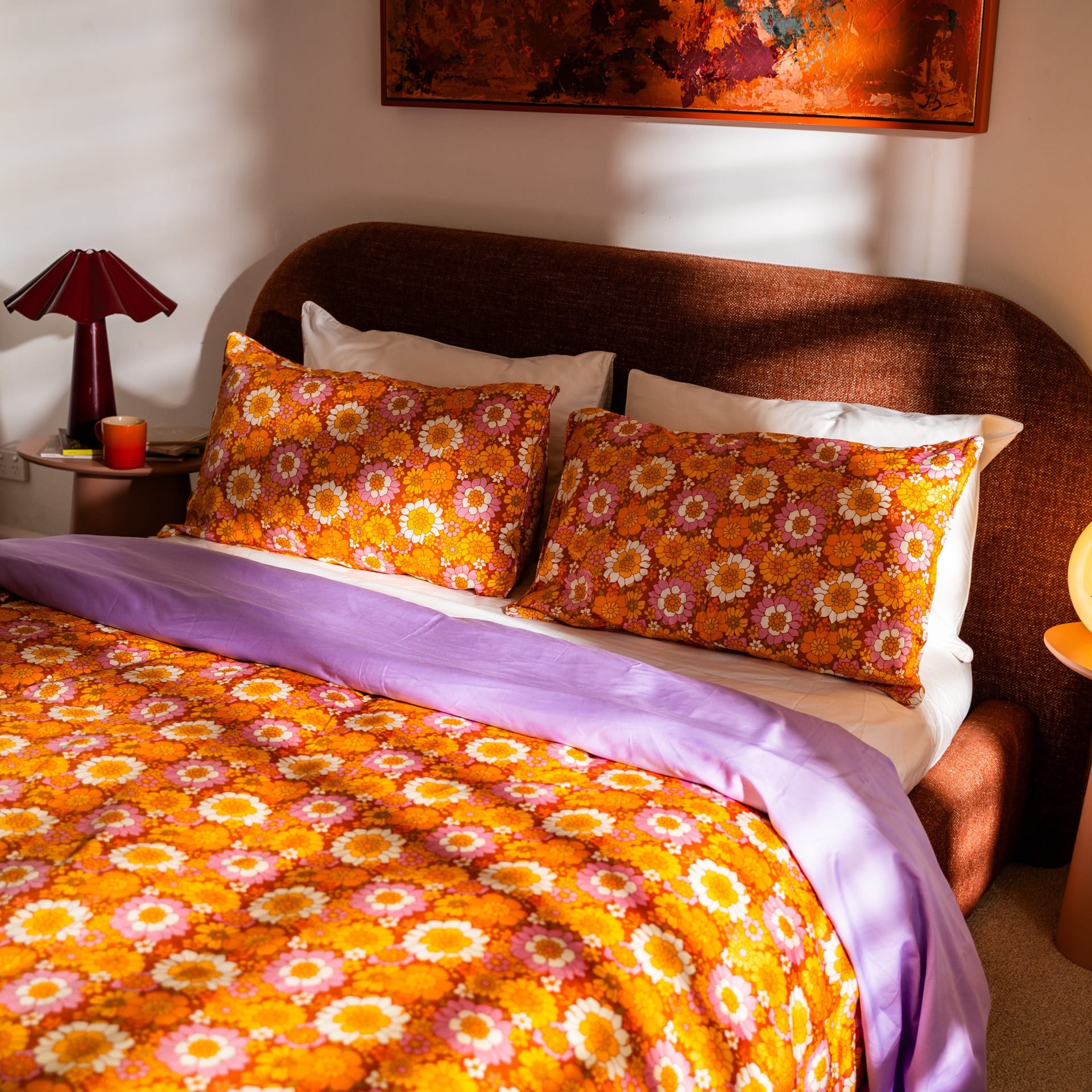
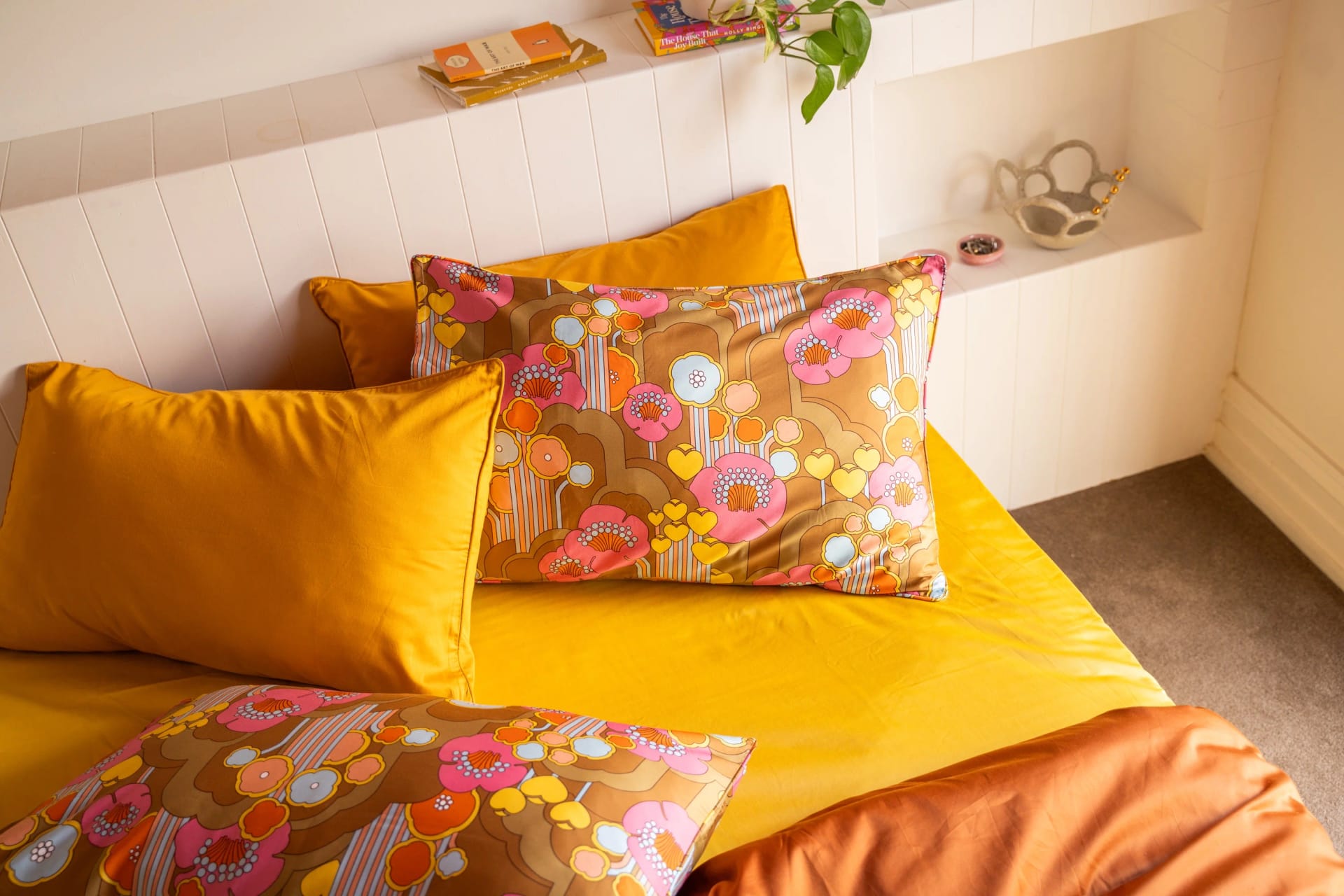
- No. Beddie’s floral and printed designs are all cotton sateen. Ivy French Linen comes in four plain colours, Raspberry, Navy, Oatmeal and Apple, plus Natural Gingham.
- Can I mix linen and cotton bedding?
- Yes. Every Beddie piece is sold separately, so you can pair linen sheets with a printed cotton quilt cover or the other way round. The bundle builder takes 10% off three pieces and 15% off four or more.
Sources
- Alliance for European Flax-Linen & Hemp: flax growing and processing
- Alliance for European Flax-Linen & Hemp: European Flax certification
- Alliance for European Flax-Linen & Hemp: linen care advice
- University of the Arts London: linen fibre properties
- The Conversation via SBS (University of Sydney researchers): bedding and sleep, 2024
- Li, Halaki & Chow, Journal of Sleep Research (2024): bedding textiles and sleep, systematic review
- Australian Classing Services: cotton staple length
- Choice: what does thread count mean?
- Choice: do you really need fabric softener?
- Demeke et al., Cleaner Production Letters (2024): water footprint of flax and cotton
- Cotton Australia: cotton’s water use
- OEKO-TEX: Standard 100
- Beddie: our materials
- Beddie: care instructions
Prices and policies were checked on 22 October 2026. They change, so check each brand’s site before you buy.